Data Centers Face Growing Local Resistance Across Metro Atlanta
Atlanta Home Network · Published June 2026
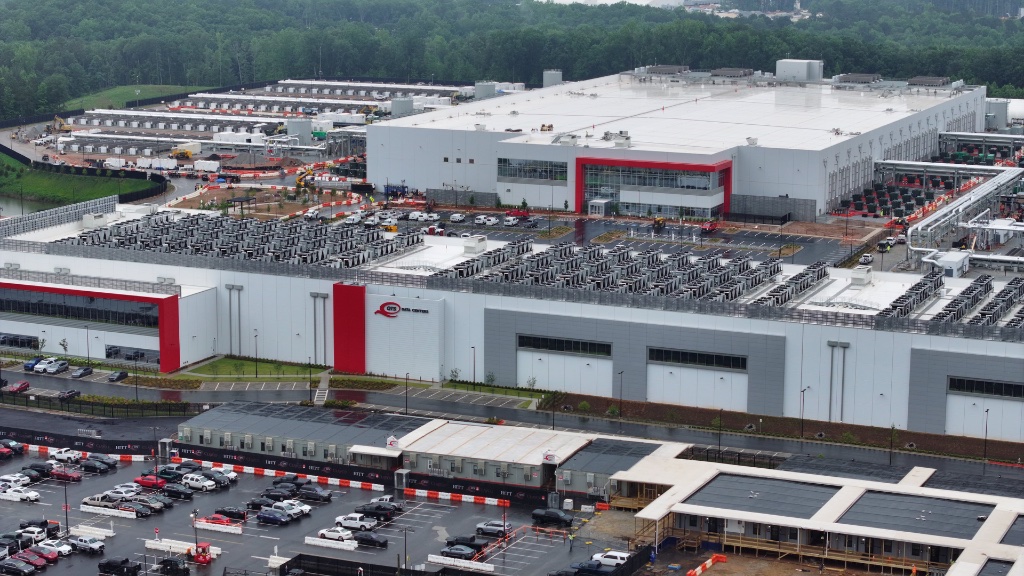
Metro Atlanta has become the fastest-growing data center market in the United States. In 2026, it has also become one of the most contested. Several metro counties have imposed or debated moratoriums on new data center approvals this year, while state lawmakers left the industry's largest tax incentive intact despite estimates of $2.5 billion in forgone state and local revenue.
Cobb, Douglas, Coweta, and DeKalb counties have all moved to slow or study data center development in 2026. The City of Atlanta banned data centers within a half mile of MARTA stations in 2024. At least ten Georgia municipalities have imposed local moratoriums on new data centers over the past year.
Cobb, Douglas, Coweta, and DeKalb counties have all moved to slow or study data center development in 2026. The City of Atlanta banned data centers near MARTA stations in 2024.
What is driving the boom
Georgia's data center industry has grown rapidly. As of early 2026, current and planned data centers across the state would require the same amount of energy needed to power roughly 3.9 million homes, and current facilities collectively use about 27 billion gallons of water per year.
The state's growth has been fueled by a longstanding sales-and-use tax exemption on data center equipment purchases. A state audit projected Georgia will miss out on roughly $2.5 billion in state and local tax revenue in fiscal year 2026 as a result of the exemption, with the estimate rising to about $3 billion in 2027.
Industry supporters and state officials point to construction investment, property tax contributions to local jurisdictions, and technology-sector jobs as tradeoffs for the incentive. The Georgia General Assembly considered but did not pass legislation in 2026 to sunset or eliminate the exemption. Bills to protect residential ratepayers from data center-related utility cost shifts also failed.
The concerns residents are raising
Community opposition to specific projects has grown across the metro. Residents in Coweta, DeKalb, southwest Atlanta, and other jurisdictions have organized against pending proposals.
The most common concerns raised in county commission and city council meetings fall into four categories:
- Water and energy consumption. Hyperscale data centers use large volumes of water for cooling and consume electricity on the scale of small cities. A data center facility south of Atlanta drew roughly 30 million gallons of water in a period before payment was resolved, an incident residents cited during subsequent opposition to expansion.
- Utility cost shifting. Georgia Power is expanding natural gas generation capacity to serve data center demand. Advocacy groups have argued that a portion of those infrastructure costs is being spread across residential and small-business ratepayers.
- Land use and housing. Large data center campuses require substantial acreage. Opponents argue that industrial parcels absorbed by data centers reduce the land available for housing or mixed-use development.
- Job counts. Data centers employ a small permanent workforce relative to their acreage. Community groups have questioned the long-term jobs benefit relative to the tax incentives.
What local governments have done in 2026
Cobb County. The Cobb County Board of Commissioners took up a proposed 180-day moratorium on data center permits and rezoning in unincorporated Cobb in February 2026. Commissioners cited a desire to study zoning ordinances before approving new applications.
Douglas County. Douglas adopted a 90-day moratorium in March 2026 while local officials evaluated a cluster of pending proposals.
Coweta County. Coweta has implemented moratorium provisions. Residents filed an appeal in early 2026 to block a large data center proposed on land the county had previously designated as protected rural.
DeKalb County. DeKalb has moved to pause data center reviews and update zoning code.
City of Atlanta. In 2024, the Atlanta City Council prohibited data centers within a half mile of MARTA station areas. The rationale, per the ordinance, was that transit-adjacent land is intended for high-density, people-oriented development.
At the state level, House Bill 1059 (the Data Center Impact Assessment and Development Moratorium Act of 2026) was introduced but did not become law. The bill would have created a state framework for assessing local impacts before permits could be issued.
The counter-argument from supporters
Industry associations, some economic development officials, and property owners of parcels rezoned for data centers argue that:
- Data centers generate property tax revenue for local jurisdictions once built, particularly in areas where the alternative land use might be lower-value.
- Construction-phase jobs and long-term operations positions, while smaller in headcount than manufacturing, are typically higher-wage.
- Georgia has become a national hub for data center investment in part because of the tax exemption, and rolling it back could push future projects to other states.
Both sides of the debate have been active in Georgia Public Service Commission proceedings and county-level zoning hearings throughout 2026.
What This Means for Atlanta Real Estate
For metro Atlanta homebuyers, homeowners, and real estate professionals, the data center debate touches the local market in three concrete ways.
Land competition. Parcels rezoned for data center use are removed from the pipeline of possible residential or mixed-use development. In counties with active moratoriums, the pause holds land in its current designation while local zoning is reviewed. Suburban parcels along interstate corridors and near existing industrial land tend to be the most contested.
Utility rates. If Georgia Power infrastructure costs continue to shift toward residential ratepayers, monthly bills for metro Atlanta homeowners could climb. Georgia Public Service Commission rate cases in 2026 and 2027 are the venues where those decisions play out. Higher fixed monthly costs put pressure on household budgets that already carry mortgage or rent obligations.
Property tax revenue. Data centers generate property tax revenue once operational, which can benefit local school districts and county budgets. The sales-and-use tax exemption on the equipment they purchase, however, reduces the total state and local revenue benefit. Metro Atlanta county budgets partly rely on that base, and the tradeoff between short-term construction investment and long-term revenue is one of the central debates.
Sources
Reporting on 2026 data center proposals, moratoriums, and community response drawn from Capital B News, WABE, Georgia Public Broadcasting, WSB-TV, The Atlanta Journal-Constitution, CBS News Atlanta, Bloomberg Tax, Inside Climate News, Georgia Watch, and Government Technology.
State tax revenue estimates from the Georgia Department of Audits and Accounts tax incentive evaluation.
Atlanta Home Network publishes housing market reports for metro Atlanta counties and cities. Have a tip or correction? Email editor@atlantahomenetwork.com.